Automata partners / control-plane builders

Agentic AIautomation forcomplexmid-marketoperations.

We design composable AI systems for organizations dealing with legacy infrastructure, approval-heavy workflows, and real operational risk. The goal is not a demo. The goal is controlled execution that holds up in production.

Live control dossier

ref_0101 / Control kernel
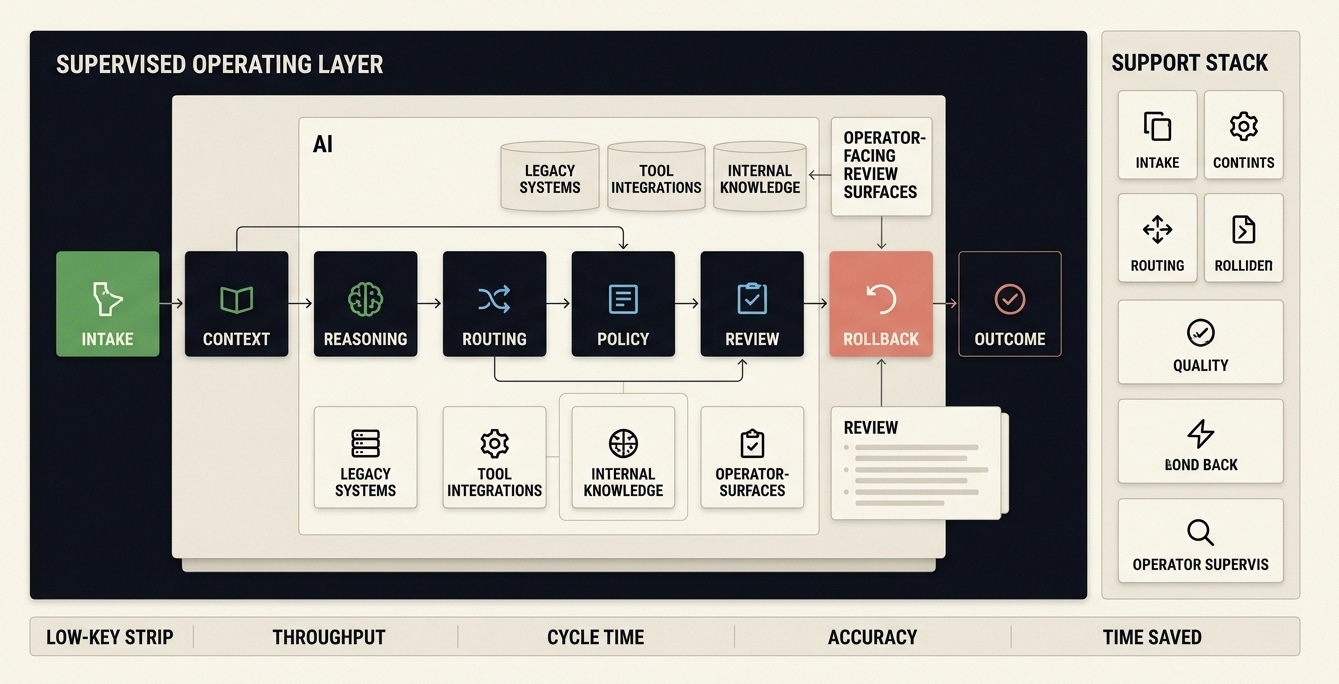
Interactive control-plane diagram for supervised agentic automationFocus or hover each square module to inspect how the system constrains reasoning, approvals, recovery paths, and measurable outcomes.INTAKE PATHLIVE / SUPERVISEDCONTROL KERNELAISupervised operating layercontaining the full AI stack.GUARDRAILSPolicy gatesRECOVERYRollback logicAUDIT TRAILAudit-readyAPPROVALSOperator reviewSERVICE LAYERComposable stackBUSINESS VALUEOutcome stance

Active module / 01

Control kernel

AI

Model reasoning sits inside a supervised operating layer that contains policy, review, rollback, and outcome controls before touching production systems.

Inspection notes

  • Retrieval context stays attached to every action path.
  • Escalation logic exists before the first launch.
  • Operator review stays visible when automation confidence drops.

Target scope

Who this system is for, how it is delivered, and the operating stance it is built to hold.

01 / Ideal client

$10M+ revenue

Teams with enough workflow complexity to justify durable automation.

02 / Delivery model

Outcome-led

Architecture, guardrails, and operating change tied to measurable value.

03 / System stance

Audit-ready

Explainable AI constrained by deterministic rules, approvals, and logs.

Built into launch

Baseline delivery conditions that stay in-path from the first supervised rollout.

01 / Legacy systems

CRMs, ERPs, EHRs, and internal knowledge stay in the loop.

02 / Human control

Approvals, escalations, and rollback paths are designed in.

03 / Measured launch

Rollout scope ties to throughput, time saved, or accuracy.

Operating model

Design the system around constraints and intents, not around hype.

Each system decision should make rollout safer, supervision easier, and later expansion cheaper.
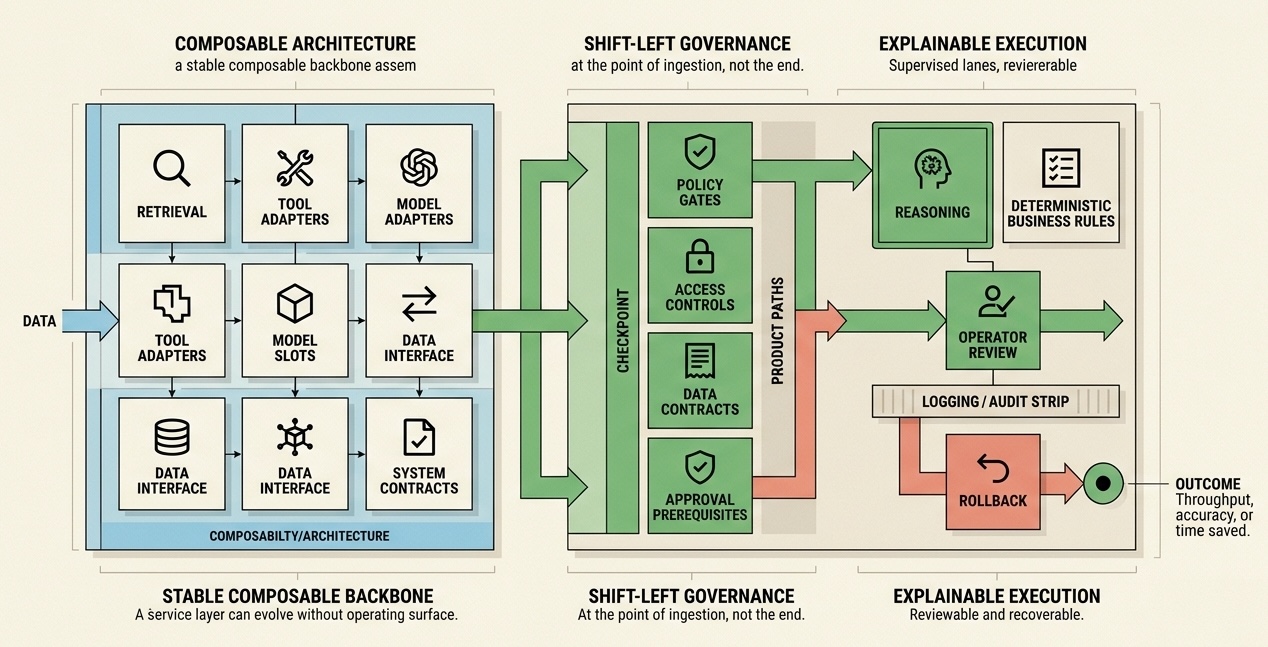
Operating model system board illustration for supervised agentic AI.
Composable architecture principle illustration.

01 / principle

Composable architecture

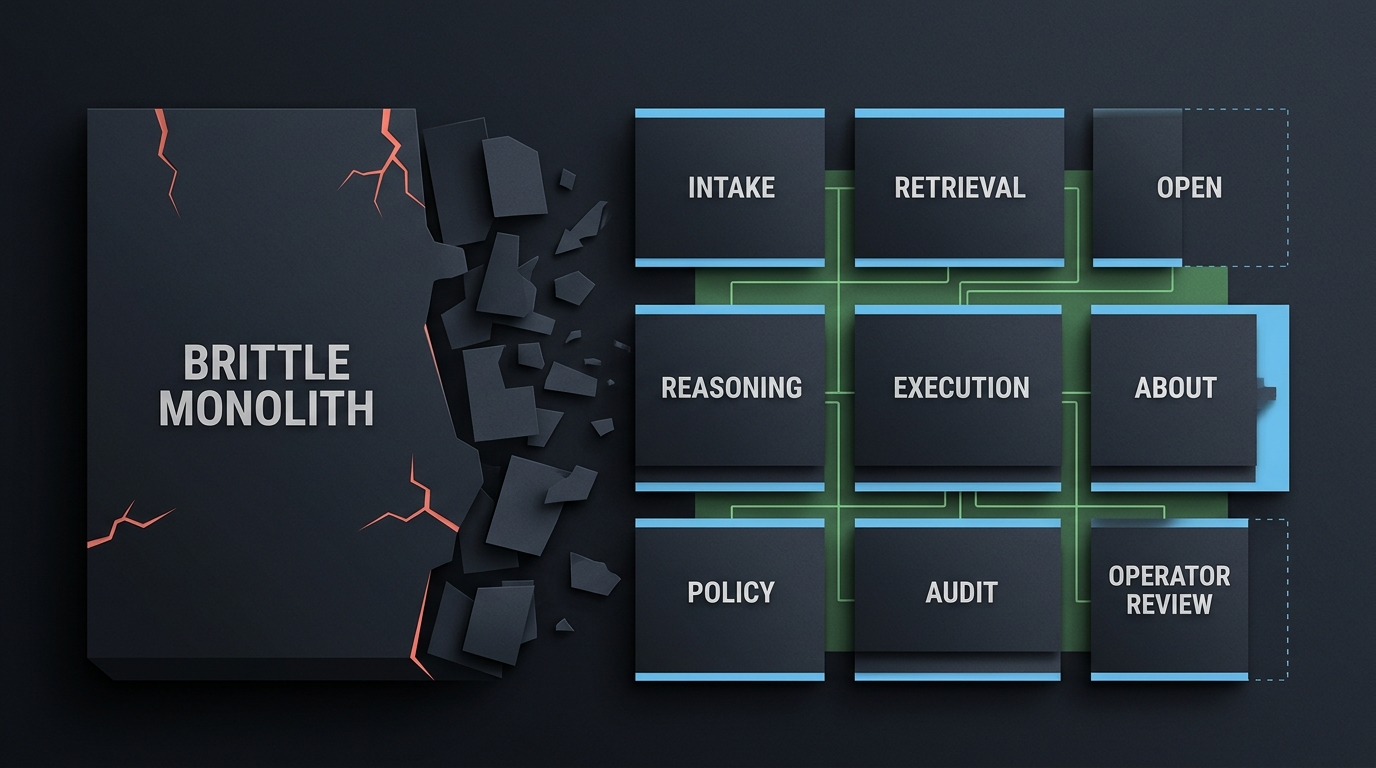
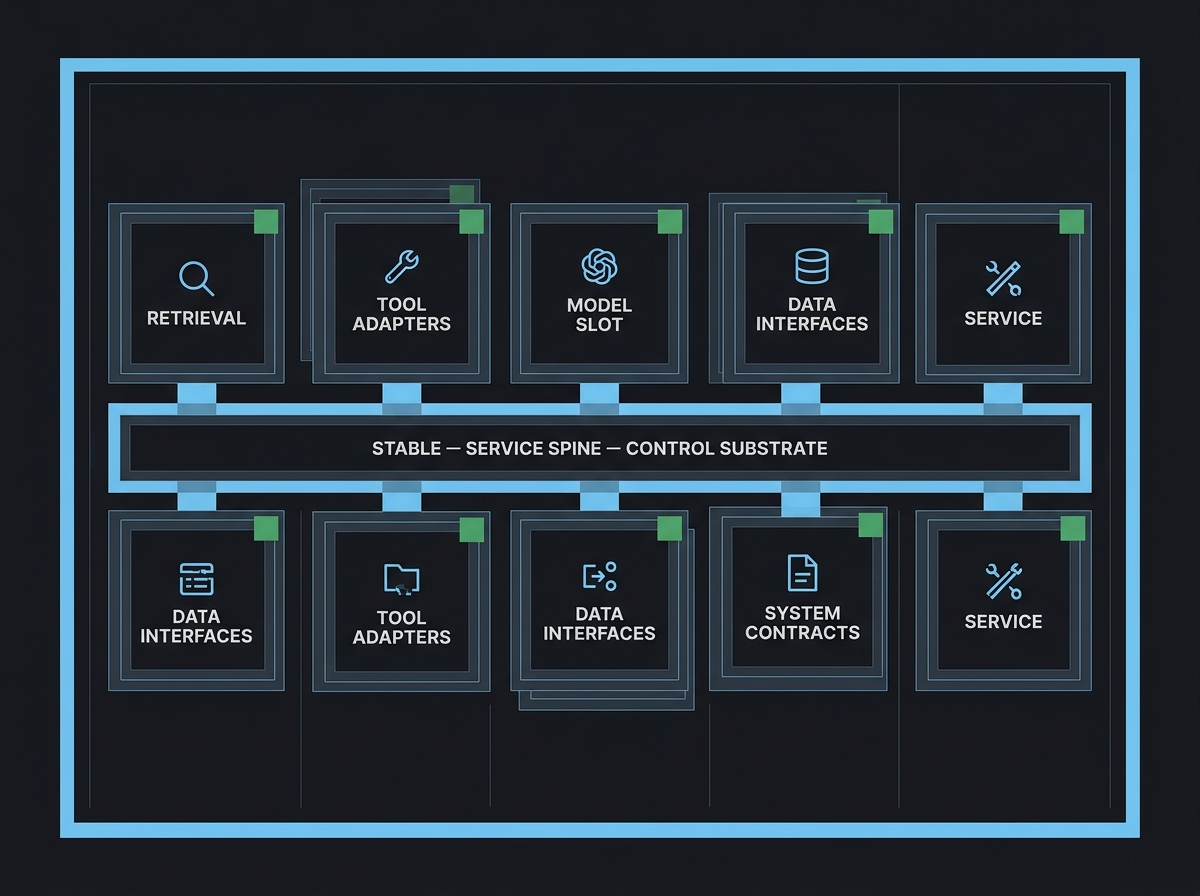
Build from interoperable services, retrieval layers, and tool integrations instead of new monoliths.

This keeps the automation layer adaptable as models, systems, and regulations change.

Shift-left governance principle illustration.

02 / principle

Shift-left governance

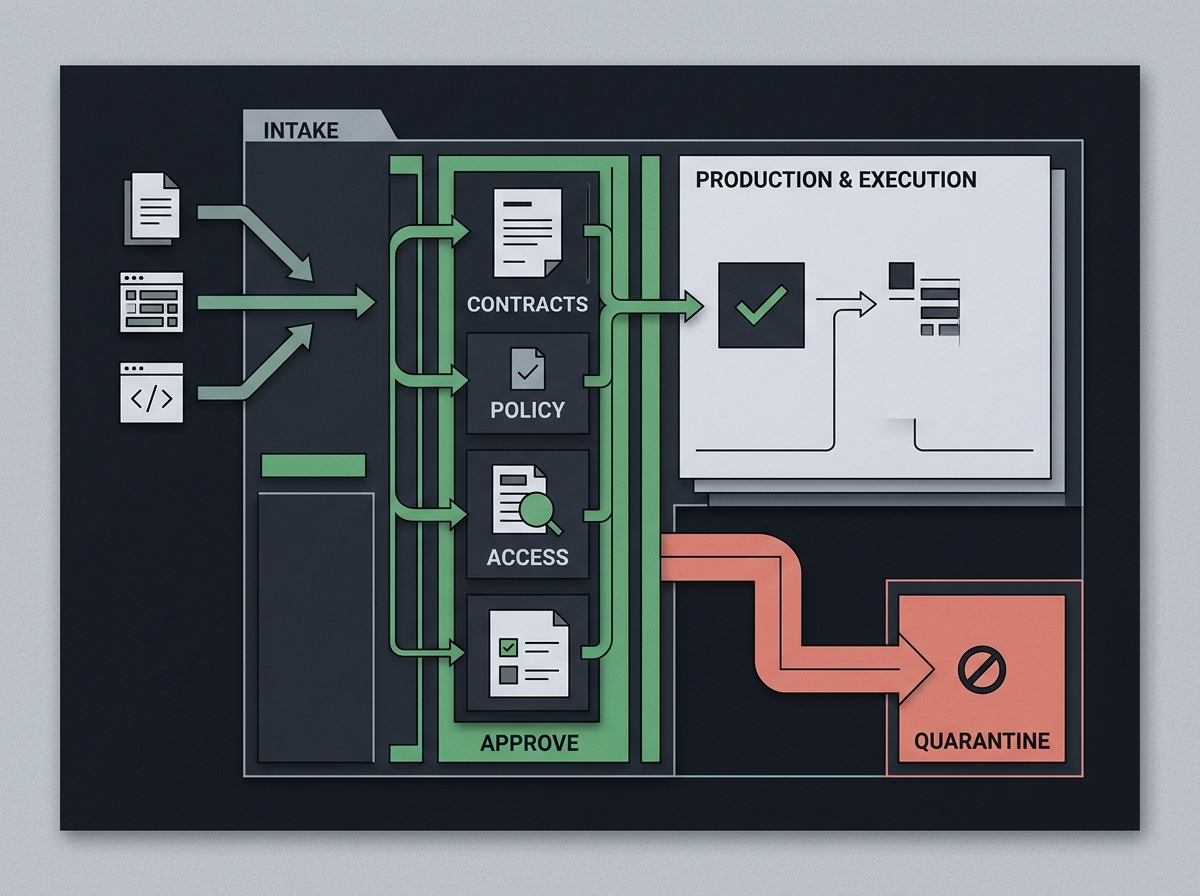
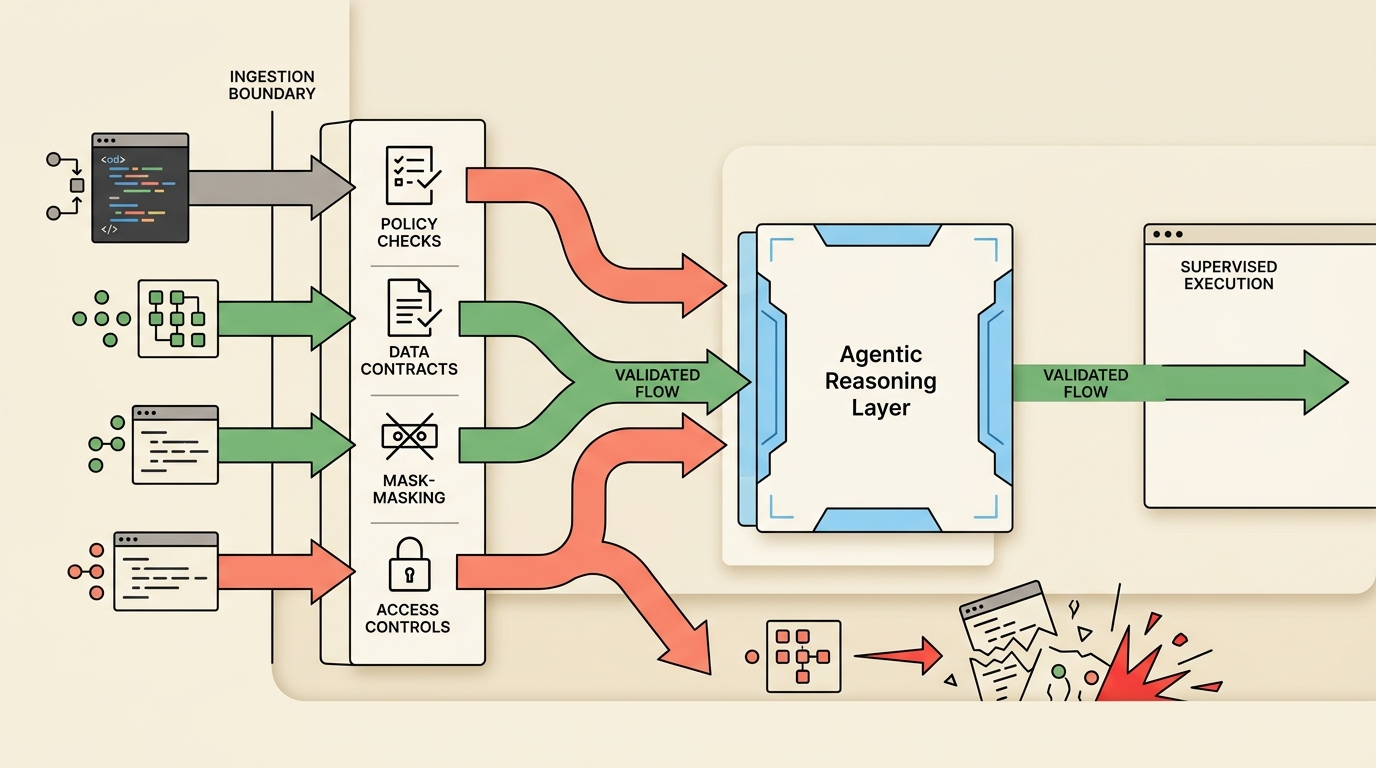
Define data contracts, access controls, and policy checks before agents touch production systems.

Security, quality, and compliance belong at the point of ingestion, not as downstream cleanup.

Explainable execution principle illustration.

03 / principle

Explainable execution

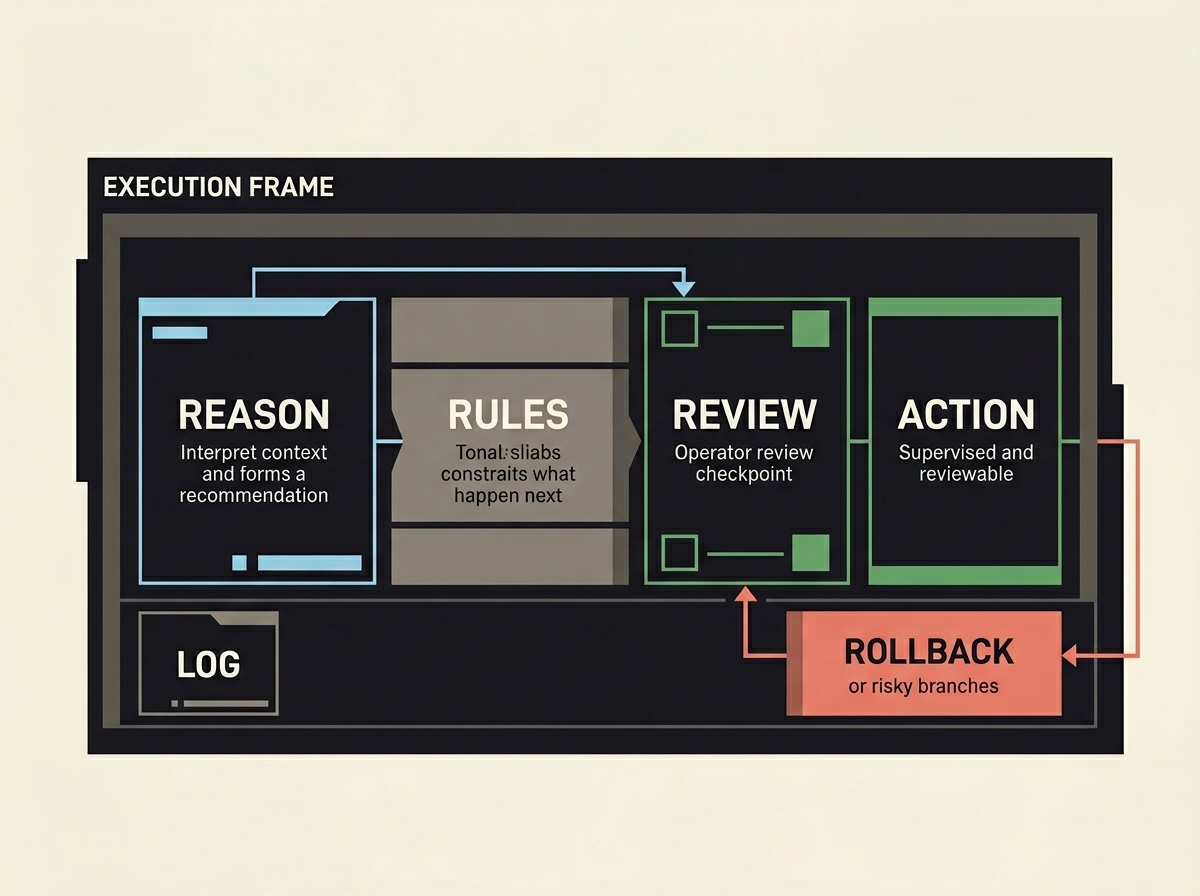
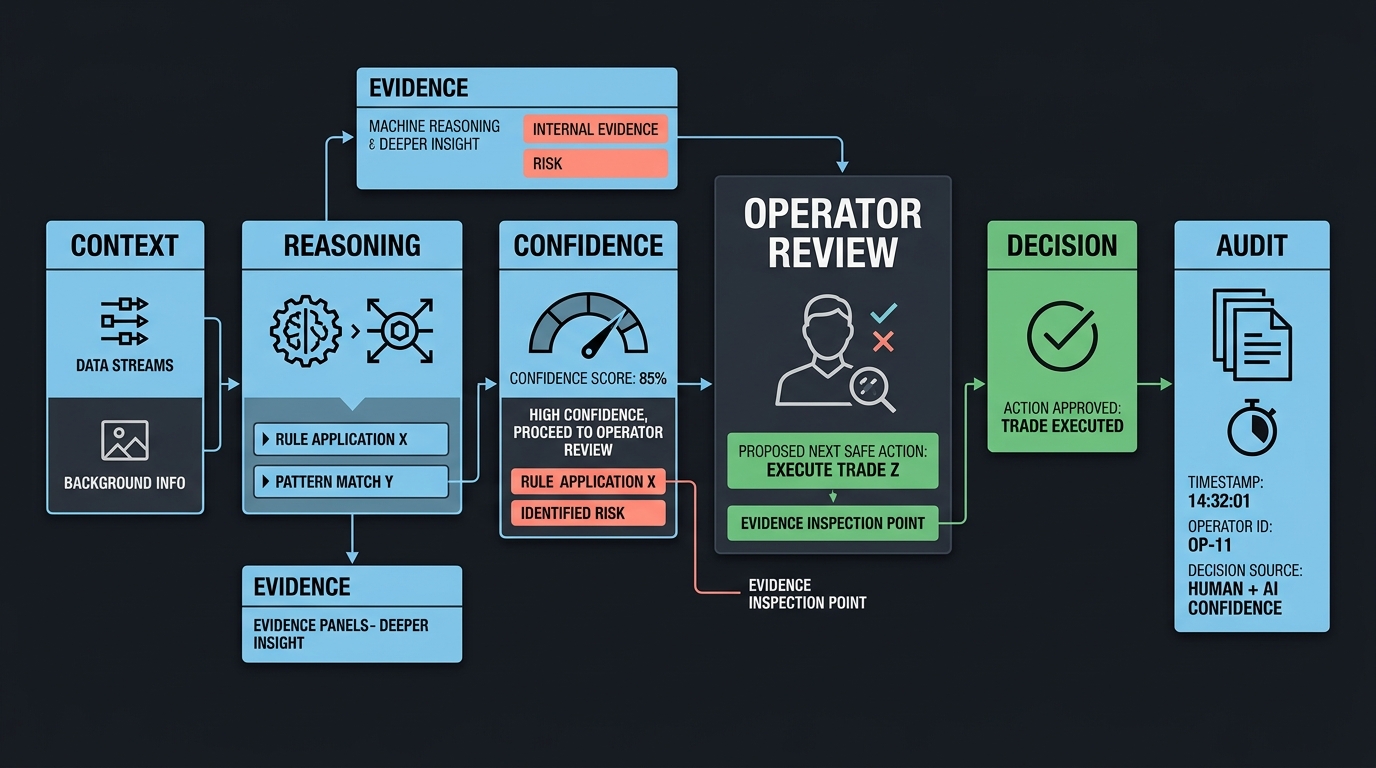
Use LLMs for reasoning, but route actions through deterministic business logic and human checkpoints.

Every recommendation and every execution path should be visible, reviewable, and recoverable.

Capabilities

Build reusable agentic systems for highly deterministic workflows.

Agentic system capability overview illustration.

Capability 01

Workflow orchestration

reusable service layer

Design supervised agentic workflows with deterministic routing, approval logic, and exception handling across fragmented operations.

Outcomes

Deliverables

  • More deterministic case triage and handoffs
    Agent workflow map and deterministic automation boundaries
  • Lower administrative drag on high-value teams
    Task graph, tool permissions, and escalation rules
  • Explicit exception paths instead of brittle RPA breakpoints
    Operational dashboards for queue health and supervised throughput

Capability 02

Architecture and integrations

reusable service layer

Design an API-first agent architecture that can reason across CRMs, ERPs, EHRs, analytics stacks, and internal knowledge bases without losing deterministic control.

Outcomes

Deliverables

  • Lower vendor lock-in across agent stacks
    Composable agent service map
  • Safer model and tool swaps as the landscape changes
    Retrieval, memory, and context architecture
  • Reusable agent services instead of one-off automations
    Integration contracts, tool adapters, and observability patterns

Capability 03

Guardrails and governance

reusable service layer

Constrain agent reasoning with deterministic policies, approvals, and rollback paths so regulated workflows stay automatable and accountable.

Outcomes

Deliverables

  • More deterministic execution in risky workflows
    Data contracts, policy models, and access controls
  • Clear approval thresholds for agent actions
    Policy gates, human approvals, and rollback paths
  • Audit trails that support review and remediation
    Logging, monitoring, and explainability views

Capability 04

Operator control plane

reusable service layer

Design the control plane people use to supervise AI agents, inspect decisions, intervene in-flight, and continuously tune highly deterministic workflows.

Outcomes

Deliverables
  • Higher trust from operators and leadership
    Control-plane interfaces, queue views, and status surfaces
  • Faster intervention when workflows drift or stall
    Exception handling, review tooling, and feedback loops
  • Continuous improvement without re-platforming
    Operational playbooks for launch and scale

Process

A disciplined path from pilot to operating system.

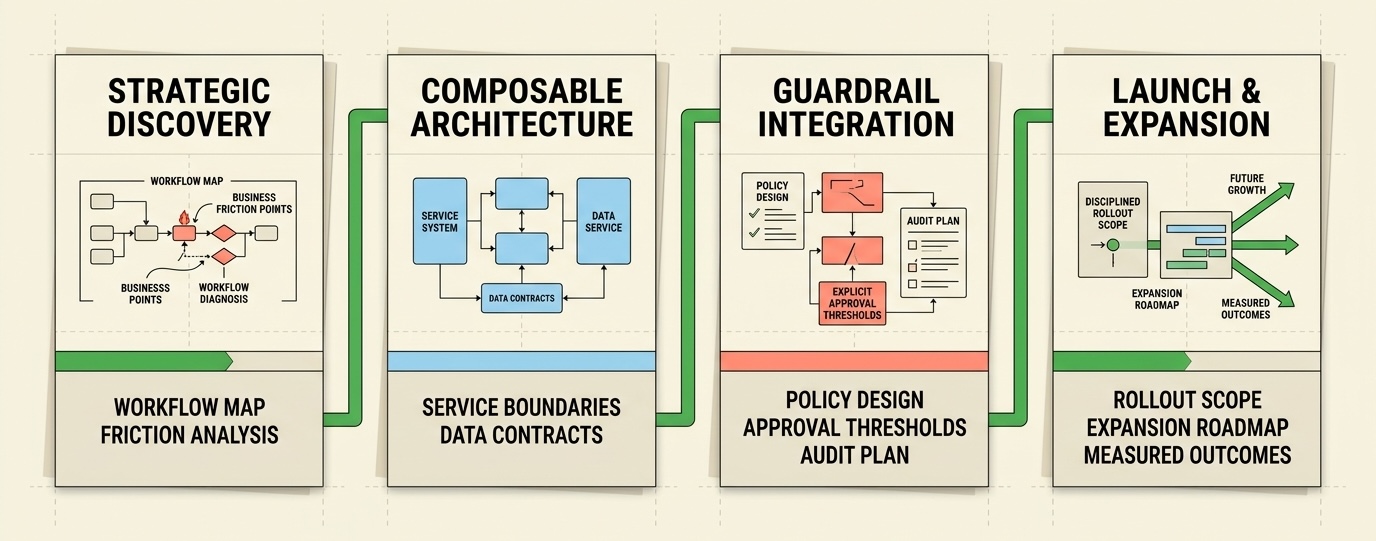
We start with workflow economics, define the control plane, then add guardrails before scale. That order matters.

See the full process
Delivery sequence illustration from discovery to launch.

Step 01

Strategic discovery

Operating output

Identify where process friction is destroying throughput, accuracy, or speed and define where automation can pay back quickly.

  • Current-state workflow map
  • Friction and exception analysis
  • Pilot recommendation tied to business value

Step 02

Composable architecture

Operating output

Design the service boundaries, model responsibilities, retrieval strategy, and system contracts needed for stable execution.

  • Automation control-plane design
  • Integration map and data contracts
  • Success criteria and rollout scope

Step 03

Guardrail integration

Operating output

Apply approvals, policy checks, logging, and fallback logic so automation is explainable before it is fast.

  • Approval thresholds and risk controls
  • Observability and audit logging plan
  • Human-in-the-loop exception pathways

Step 04

Launch and expansion

Operating output

Deploy the pilot with active operator oversight, measure real outcomes, then scale to adjacent workflows once the control model holds.

  • Production rollout plan
  • Operator training and governance rhythm
  • Expansion roadmap for phase two

Priority sectors

Where complex operations and fragmented systems create the most leverage.

Healthcare operations

Automation for care-gap remediation, referral operations, prior authorization workflows, and other administrative bottlenecks around clinical systems.

Common pain points

  • Fragmented EHR and ancillary systems
  • Manual follow-up that delays patient access
  • High compliance and data-sensitivity requirements

Automation use cases

  • Care gap outreach and scheduling support
  • Prior auth packet assembly and routing
  • Referral intake, triage, and escalation management

Financial services

Agentic workflows for risk operations, underwriting support, fraud triage, and reconciliations that span multiple ledgers and systems.

Common pain points

  • High volume of document and exception handling
  • Strict regulatory and approval requirements
  • Operational drag between frontline teams and analysts

Automation use cases

  • Commercial loan intake and enrichment
  • Fraud case triage with explainable review paths
  • Daily reconciliation and exception routing

Manufacturing and logistics

Automation for supply chain exceptions, quality workflows, and plant or warehouse coordination where latency creates real cost.

Common pain points

  • Disconnected planning, inventory, and quality systems
  • Slow response to anomalies and delays
  • Heavy dependence on tribal knowledge

Automation use cases

  • Supply chain exception detection and routing
  • Maintenance and quality issue coordination
  • Demand-signal enrichment for planners and operators

Energy and infrastructure

Agentic coordination for asset health, field operations, maintenance queues, and pricing or demand-response workflows.

Common pain points

  • Operational data spread across specialized tools
  • High cost of delayed maintenance decisions
  • Safety and compliance requirements around execution

Automation use cases

  • Field dispatch support and queue prioritization
  • Asset monitoring and maintenance planning
  • Signal aggregation for pricing and operational decisions

MarTech & eCommerce

Use agentic systems to automate lead qualification, lifecycle journeys, merchandising workflows, and commercial operations.

Common pain points

  • Too many tools controlling one buyer journey
  • Manual content and campaign handoffs
  • Weak visibility into the path from signal to conversion

Automation use cases

  • Lead qualification and routing
  • Lifecycle messaging and retention workflows
  • Catalog or merchandising operations support

Ready to scope a pilot

Start with one workflow. Build the operating model that can scale.

Reserve capacity for a brief that defines the pilot, the system boundaries, and the governance stance before implementation starts.

Launch criteria

  • One workflow with real operational friction
  • One measurable outcome to prove
  • One governance stance agreed before build